Arturo Márquez
Compositor

Arturo Márquez was born deep in the Sonoran desert in the colonial town of Alamos, Mexico on December 20, 1950. His mother, Aurora Navarro, says “her womb cried” when describing his birth. He was named after his father, Arturo Márquez, who was of Mexican descent from Arizona. Arturo’s father was a man of many talents. He played the violin, was a mariachi, and worked as a carpenter when the family needed to make ends meet. He introduced his first born son to music. Arturo’s father often played with a quartet, so his first music lessons consisted of listening to the traditional music, waltzes, and polkas they performed.
La familia Márquez se trasladó a Los Ángeles, California, en 1962, donde Arturo comenzó a estudiar violín y otros instrumentos en su escuela secundaria. También empezó a componer. Márquez dijo: "Mi adolescencia transcurrió escuchando a Javier Solís, sonidos de mariachi, los Beatles, Doors, Carlos Santana y Chopin". A los 17 años regresó a Sonora, y al año siguiente fue nombrado director de la Banda Municipal de Música de Navojoa.
Márquez he entered the Mexican Music Conservatory in 1970 where he studied with Joaquin Gutierrez Heras and Federico Ibarra. Later he received a scholarship from the French government to study composition with Jacques Casterede in Paris. After studying in France he received a prestigious Fulbright Scholarship in the US, where he used it to obtain a MFA degree from the California Institute of the Arts.
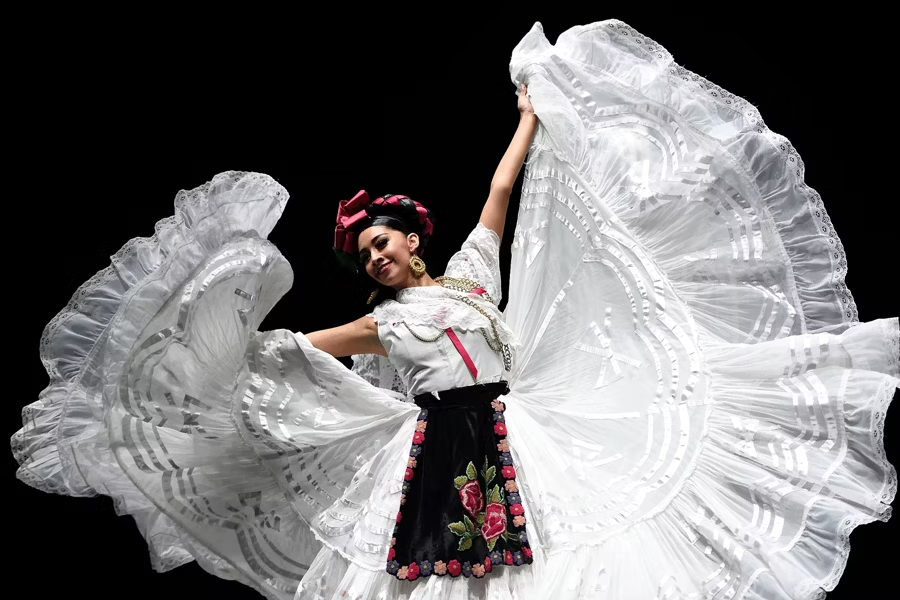
Until the early 1990s Márquez’ music was largely unknown outside his native country. That changed when he was introduced to the world of Latin ballroom dancing. The movement and rhythms led him to compose a series of pulsating Danzones. The Danzones are a fusion of dance music from Cuba and the Veracruz region of Mexico. The most popular of the Danzonesis the Danzón No. 2. It thrills audiences with its entrancing, seductive rhythms. The Danzón No. 2 was commissioned by the National Autonomous University of Mexico (UNAM), and because of its popularity, it is often called the second national anthem of Mexico.
Arturo Márquez trabaja en la Universidad Nacional de México, Escuela Superior de Música y en el Centro Nacional de Investigación, Documentación e Información de la Música Mexicana. Vive con su familia en Ciudad de México.
Eventos anteriores

Gira por el Reino Unido en 2026
Festival Internacional de Edimburgo: Concierto familiar


Sinfonías para colegios
La « director de orquesta » con Ana María Patiño-Osorio
Programa Escuelas Primarias 2026